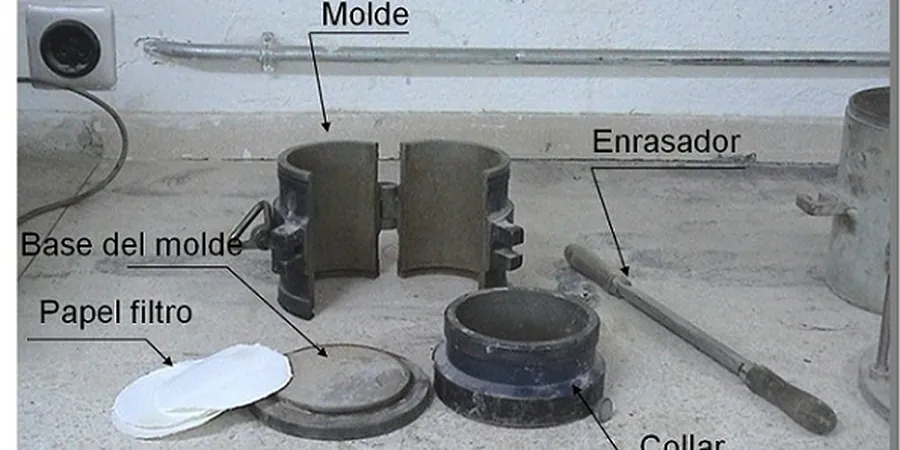
League City sits on a complex mix of Beaumont Formation clays and Quaternary alluvial deposits. High plasticity clays dominate the western neighborhoods, while looser silty sands appear near Clear Creek. This variability makes moisture-density control a critical step before any pad, pavement, or utility trench backfill. The Proctor test establishes the target dry density and optimum moisture content for each soil type encountered on site. A single borrowed fill source can behave completely differently than the native clay just two feet below grade. Without this reference curve, achieving 95 percent relative compaction becomes guesswork. The lab runs both Standard Proctor (ASTM D698) and Modified Proctor (ASTM D1557) depending on project specifications and structural loading expectations.
Hitting the right moisture window in League City’s Beaumont clays can save days of rework on a single lot.
Frequently asked questions
Which Proctor standard applies to my League City project: Standard or Modified?
It depends on the structural engineer’s specification. Most residential slabs and utility trenches in League City reference Standard Proctor (ASTM D698). Commercial pads, roadway subgrade, and engineered fill under mat foundations typically require Modified Proctor (ASTM D1557) due to higher loading and stricter settlement tolerances.
How much does a Proctor test cost in League City?
A Standard Proctor (ASTM D698) typically runs between US$100 and US$180. A Modified Proctor (ASTM D1557) ranges from US$160 to US$240. One-point Proctor checks for field verification fall at the lower end of that range. Pricing depends on sample preparation method and turnaround time.
How long does it take to get results from a Proctor test?
Standard turnaround is 48 hours after sample delivery. Expedited 24-hour results are available during active earthwork operations in League City when field crews are waiting on density targets.
Can you run a Proctor on site instead of in the lab?
The full Proctor test requires controlled lab conditions. However, a one-point Proctor can be run on site using a rapid moisture-density relationship when the soil type has already been calibrated in the lab. This gives field technicians a quick check without waiting for a full curve.