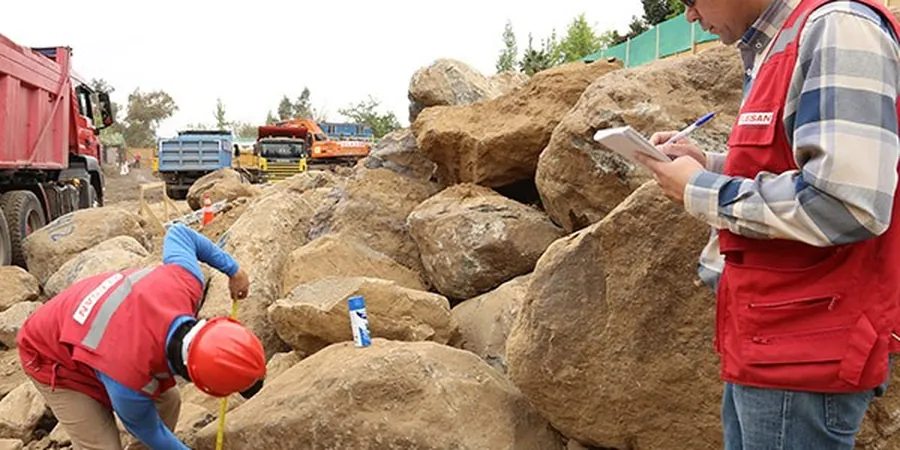
Building near Clear Lake presents very different soil challenges than building along the Dickinson Bayou corridor in League City. The first might have you working with stiff Beaumont Formation clays, while the second often reveals looser Quaternary alluvium that compresses unevenly under load. A detailed soil mechanics study defines these boundaries before excavation begins. Contractors across Galveston County know that assuming uniform ground conditions is an expensive mistake—remediation after the fact always costs more. Whether your project sits in the master-planned communities of South Shore or closer to the historic district, the soil profile dictates foundation type, drainage plans, and long-term performance. Our team delivers lab correlations that turn raw field data into actionable bearing capacity numbers and settlement curves for League City's specific geology.
League City's Beaumont clays can swell 10% in volume between dry and wet seasons—your foundation design needs to account for that range.
Methodology and scope
League City sits on the Texas Gulf Coastal Plain, where the Pleistocene-age Beaumont Formation dominates the near-surface geology—predominantly high-plasticity clays (CH) with intermittent silty sand lenses. The groundwater table here often sits just 3 to 6 feet below grade, a critical factor when evaluating excavation stability. ASTM D2487 classification combined with Atterberg limits testing typically reveals Liquid Limits above 50% and Plasticity Indices exceeding 25% in the surface clays, indicating significant shrink-swell potential. For pavement design,
CBR testing on the subgrade provides the modulus input that League City's public works reviewers expect in construction plans. The soil mechanics study integrates direct shear and one-dimensional consolidation data to model settlement under sustained loads.
In the deeper strata, we sometimes encounter the Willis Formation sands, which drain better but can introduce differential settlement risks at the transition zones between clay and sand units. Our index testing program measures moisture-density relationships, while the triaxial series establishes effective stress parameters for slope and wall design. The entire analysis feeds a geotechnical report that League City building officials accept because it speaks directly to the Coastal Plain conditions, not generic textbook values.
Frequently asked questions
What does a soil mechanics study cost for a single-family lot in League City?
For a standard residential lot in League City, a soil mechanics study including CPT soundings, lab index testing, and a foundation recommendation report typically runs between US$3,480 and US$5,250, depending on the number of borings and the depth of the Beaumont clay investigation required.
How does the Beaumont Formation clay affect my foundation design?
The Beaumont Formation clays in League City exhibit high plasticity and moderate to high shrink-swell potential. The soil mechanics study quantifies this through Atterberg limits and swell-consolidation testing, then provides design recommendations—often stiffer slab-on-grade with moisture barriers or drilled piers extending into less active strata.
How long does it take to get the final geotechnical report?
Fieldwork in League City usually takes one to two days. Laboratory testing, particularly the one-dimensional consolidation which runs for 24 to 48 hours per sample, means the final report is typically delivered within 10 to 14 business days from site access.
Is a soil mechanics study required for a building permit in League City?
Yes, League City building officials require a geotechnical report prepared by a licensed professional engineer for new commercial construction and most residential additions. The report must address the specific soil conditions encountered on your lot, not a generic regional study.
What's the difference between a basic soil test and a full soil mechanics study?
A basic soil test might give you plasticity index and moisture content. A full soil mechanics study adds consolidation parameters, direct shear strength, and effective stress analysis. For League City's expansive clays and high water table, the full study gives your structural engineer the data needed to design for differential settlement and long-term movement.