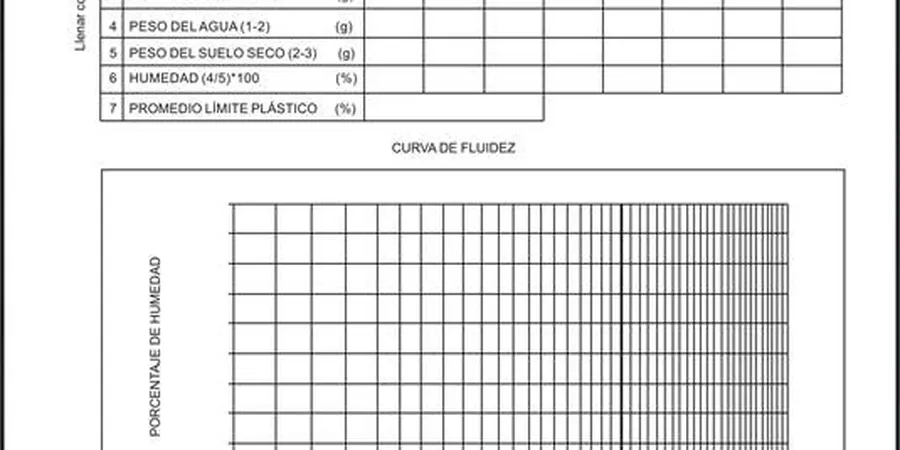
The growth of League City, from a railroad stop along the Galveston, Houston and Henderson line to a major Clear Lake suburb, has pushed development into low-lying prairie where soils demand closer scrutiny. Houston Black clay and associated alluvial deposits dominate much of the area around Clear Creek and its tributaries, bringing plasticity issues that directly influence slab performance. For residential subdivisions off State Highway 96 or commercial pads near I-45, determining the Atterberg limits on a disturbed sample barely scratches the surface of what the subgrade will do under seasonal moisture flux. The liquid limit test, run in our lab per ASTM D4318, quantifies the water content at which that clay transitions from a plastic paste to a viscous fluid, a threshold that contractors ignore at their peril. Coupling these results with a grain-size analysis helps separate true fat clays from silty fill that might otherwise fool a visual classification.
A liquid limit above 50 and a plasticity index exceeding 30 are Gulf Coast red flags that no amount of rebar can fix on their own.
Methodology and scope
A recent forensic review of a warehouse slab off Calder Drive showed edge curls exceeding two inches in the first summer after construction. The original report had logged the site material as lean clay based on hand feel alone, missing a liquid limit of 72 and a plasticity index above 40. That level of expansion potential, left unaddressed, turned a six-inch slab into a liability. In our lab, the Atterberg series starts with the Casagrande cup method for the liquid limit, dropping the brass cup at two blows per second until a 13-millimeter closure is achieved across a grooved pat. The plastic limit follows by rolling 3-mm threads until crumbling occurs. From these two numbers we derive the plasticity index and, when paired with natural moisture content, the liquidity index, a practical gauge of in-situ behavior. For deep foundation work, the index feeds directly into the
CPT-based soil behavior type charts, refining the qₛ–Rf classification in the upper 10 to 15 feet where moisture cycles are most aggressive. The entire procedure runs under the same ISO 17025 quality system that governs all our mechanical testing, with every technician logging cup drop counts and thread diameters in real time.
Local considerations
The most expensive shortcut in League City geotech is skipping the plastic limit and running only a liquid limit on a composite grab sample. That single number gives a false sense of security because it says nothing about the breadth of the plastic range. A soil with LL 45 and PL 22 has a PI of 23 and will shrink-swell far less than a soil with LL 45 and PL 8, whose PI of 37 indicates active clay capable of heaving a lightly loaded slab. We have seen this mistake repeatedly on small commercial build-outs along FM 518 where the client assumed a moderate liquid limit meant moderate risk. The plasticity index, not the liquid limit alone, governs the expansion classification in ASTM D4829 and drives the required foundation depth under the IBC. Without both numbers, the structural engineer is guessing on over-excavation depth, lime treatment ratios, or the need for a suspended structural floor.
Applicable standards
ASTM D4318-17e1 – Standard Test Methods for Liquid Limit, Plastic Limit, and Plasticity Index of Soils, ASTM D2487-17 – Standard Practice for Classification of Soils for Engineering Purposes (Unified Soil Classification System), ASTM D4829-21 – Standard Test Method for Expansion Index of Soils, ASTM D6913/D6913M-17 – Standard Test Methods for Particle-Size Distribution (Gradation) of Soils Using Sieve Analysis