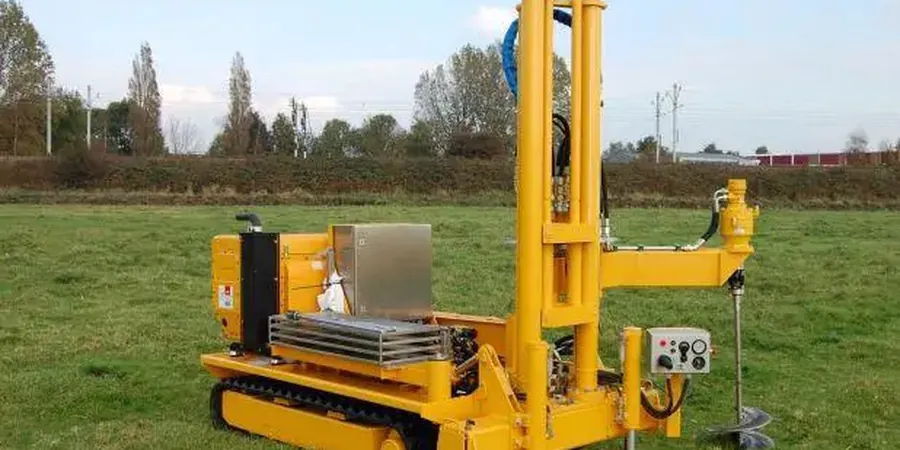
League City's position along Clear Creek and its proximity to Galveston Bay create subsurface conditions dominated by Pleistocene Beaumont Formation clays and Holocene alluvial deposits. The high groundwater table, often within 3 to 5 feet of grade, combined with soft, compressible clays, presents significant settlement challenges for any structure. Standard penetration testing alone cannot capture the continuous stratigraphy needed to identify thin drainage layers or erratic sand lenses in these coastal plain deposits. The cone penetration test resolves this uncertainty. It provides a near-continuous profile of tip resistance, sleeve friction, and pore pressure, allowing the geotechnical engineer to differentiate between normally consolidated clay, overconsolidated crust, and silty sand stringers without the sample disturbance issues common in this region. For projects near the Dickinson Bayou watershed or in older sections of League City, the CPT data integrates directly with settlement calculations and lateral spreading assessments governed by the current IBC.
A single CPT sounding in League City's Beaumont Clay can replace multiple SPT borings, delivering a continuous pore pressure profile that reveals consolidation behavior invisible to split-spoon samples.