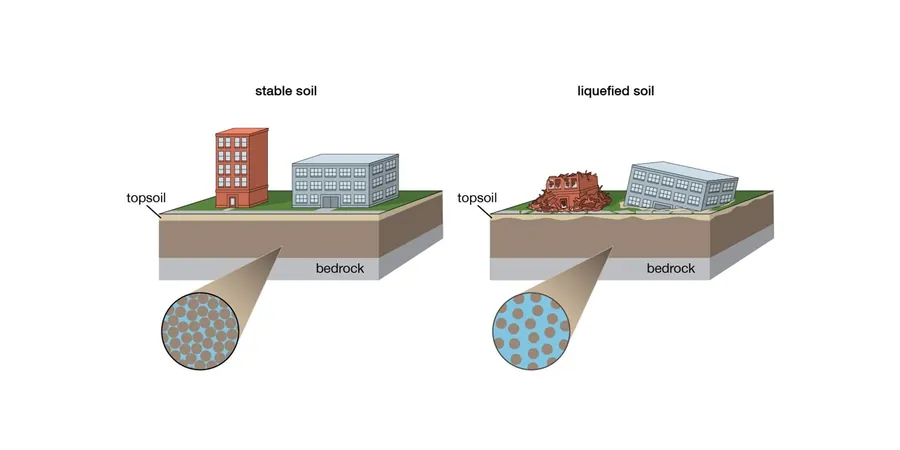
The split-spoon sampler drives 18 inches into saturated fine sand under a 140-pound auto-hammer. We stop the test when the blow count drops below 3 between 10 and 20 feet depth. That is the first flag for liquefaction potential in League City. The sampler comes up with gray-brown sand, uniform grain size, no clay binder. This soil profile repeats across subdivisions near Clear Creek and along the FM 518 corridor. Our team runs these SPT drilling campaigns to map loose Holocene sands that dominate the upper 30 feet of the local stratigraphy. We correlate field N-values with fines content from grain size lab results to refine the cyclic resistance ratio. The math is straightforward. The consequences of skipping it are not.
A factor of safety below 1.1 in saturated sand at 12 feet depth means post-liquefaction settlement of 4 to 6 inches. That number governs the foundation design.
Frequently asked questions
Does League City require a liquefaction analysis for building permits?
The City of League City adopts IBC 2021 with local amendments. Section 1803 requires a geotechnical investigation for all commercial structures. If the site is classified as Seismic Site Class D, E, or F with saturated sands in the upper 50 feet, the building official will require a liquefaction assessment per ASCE 7-22 Chapter 20. We include the signed and sealed report in the permit submittal package.
What soil types in League City are most prone to liquefaction?
The loose fine sands and silty sands in the upper 20 to 30 feet of the Holocene overbank deposits. These soils have low SPT blow counts (N < 10) and uniform grain size distribution. When saturated and subjected to cyclic shear from an earthquake, pore water pressure builds rapidly and effective stress drops to zero. The Beaumont Formation clays below are not liquefiable but can experience cyclic softening.
How much does a soil liquefaction analysis cost for a League City project?
A complete liquefaction assessment including field investigation and analytical report ranges from US$2,540 to US$3,680 depending on the number of borings or CPT soundings required. A single-family residence on a standard lot may need one boring with SPT sampling. A commercial building pad typically requires two to three investigation points to satisfy IBC spacing requirements.
What is the difference between SPT-based and CPT-based liquefaction analysis?
SPT-based analysis uses blow count data from split-spoon sampling. It is widely accepted but gives discrete data points every 5 feet. CPT-based analysis provides continuous soil behavior type and resistance profiles at 1-inch intervals. The CPT is faster, produces no soil cuttings, and captures thin liquefiable seams that SPT can miss. We recommend CPT for high-risk sites and SPT for projects with existing data or limited access.
Can liquefaction be mitigated without deep foundations?
Yes. Stone columns and vibrocompaction are two ground improvement techniques that densify loose sands and increase the cyclic resistance ratio. We design the treatment grid and depth based on the factor of safety profile from the triggering analysis. Post-treatment verification with CPT confirms the improvement. This approach often allows the structural engineer to use conventional shallow footings instead of deep piles, reducing overall foundation cost.